December 2025 saw several high‑impact cybersecurity incidents in Australia that exposed systemic weaknesses in third‑party providers, data governance, and critical infrastructure security.
Key Incidents
- Netstar Australia ransomware attack
- Melbourne‑based telematics and fleet‑management provider servicing commercial, government, and critical‑infrastructure customers was hit by the BlackShrantac ransomware group.
- Attackers claimed to steal about 800 GB of data, including sensitive telematics and customer‑related operational information, turning a single supplier breach into a multi‑client risk event.
- University of Sydney data breach
- Unauthorised access to an internal/third‑party code repository exposed historical personal data that had been improperly stored alongside software assets.
- More than 27,000 individuals – students, staff, alumni, and affiliates – were impacted, with exposed data including names, dates of birth, contact details, addresses and employment information from roughly 2010–2019.
- WatchGuard Firebox critical vulnerability
- A critical out‑of‑bounds write flaw (CVE‑2025‑14733, CVSS 9.3) in WatchGuard Firebox firewalls was found under active exploitation, enabling remote device takeover on internet‑exposed systems.
- Tens of thousands of Firebox devices were identified online globally, with a significant footprint in Australia, prompting emergency firmware updates and urgent patching guidance.
Impact on Australian Organisations
- Attackers increasingly target service hubs and niche providers (e.g., telematics, managed services) to gain leverage over many downstream customers at once.
- Development and test environments are becoming high‑value but weakly governed entry points, especially when legacy personal data is left in code repositories or shared tooling.
- Critical network and VPN appliances, once viewed purely as protective controls, are now being weaponised via zero‑day exploits, enabling stealthy lateral movement and data exfiltration.
- Broader 2025 statistics show Australian entities among the most targeted globally by ransomware and data‑extortion, with hundreds of breaches reported and high rates of ransom payment.
Strategic Implications and Recommendations
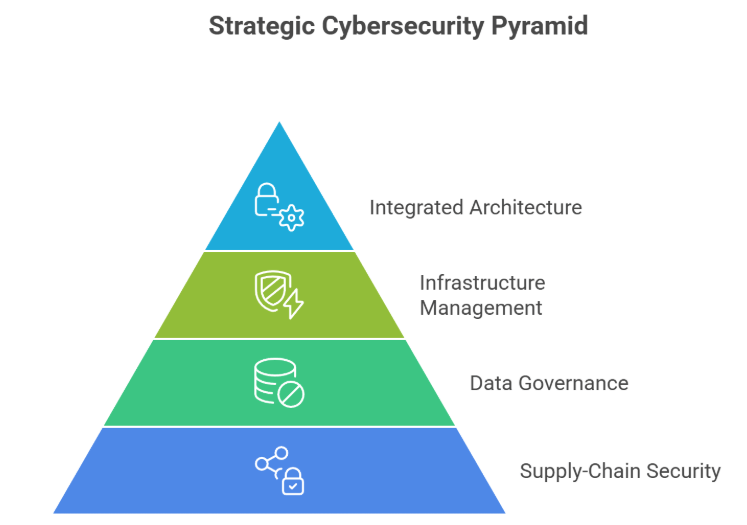
- Supply‑chain security
- Strengthen due‑diligence and ongoing assurance for third‑party and managed‑service providers, including security assessments, incident‑notification obligations, and robust segmentation between provider platforms and internal systems.
- Data governance and environment segregation
- Enforce clear policies to prevent production or historical personal data from residing in development or code‑repository environments; apply production‑grade access control, encryption, and logging wherever such data is present.
- Infrastructure and vulnerability management
- Explicitly include firewalls, VPN appliances, and other edge devices in vulnerability‑management programmes, with SLAs for emergency patches and post‑incident credential/certificate rotation.
- Integrated cybersecurity architecture
- Move away from fragmented point solutions toward an integrated approach that combines identity security, network segmentation, data‑loss prevention, and continuous monitoring across on‑premises, cloud, and third‑party environments.
We are here to help
For organisations looking to turn these lessons into concrete improvements in supply‑chain controls, data protection, and infrastructure hardening, please contact ANP Technology for comprehensive cybersecurity integration services and tailored advisory support.
📩 Contact ANP Technology Today